Live northern lights conditions for Glacier, the Hi-Line and dark skies across Montana.
—
Viewing score
Tonight in Glacier National Park
Loading live conditions…
Checking NOAA aurora activity, local clouds, darkness, solar wind and moonlight.
Aurora signal—
Best sky—
Peak Kp 24h—
Current Kp—
Solar wind speed—
Bz GSM—
Moon illuminated—
What this score means
The 0–100 number is our viewing score, not a percent chance. It combines NOAA signals with NWS clouds, darkness, moonlight and Montana regional thresholds.
Montana Regional Outlook
Northern Montana can see aurora during moderate geomagnetic activity, while Glacier adds exceptionally dark protected skies and open northern views.
Live aurora visual desk · Montana
Glacier, the Hi-Line, or the southern valleys?
Choose a region to compare its real-time aurora signal and planning threshold. Glacier's protected darkness helps, but a ridge can block a low northern glow.
Explore the viewing regions
Choose a marked region to update the live Viewing Score at the top of this page. Pin locations are regional reference points, not exact public parking or viewing entrances.
Loading the key-free dark map…
Select a region to see its forecast threshold and the current NOAA signal.
Mountain passes and North Fork roads are seasonal; the markers represent regions, not confirmed open parking or viewing sites.
Find one of the viewing locations in the field guide
These are genuine places researched below. Each link opens a location-name search on OpenStreetMap; it is not a verified gate or parking-pin coordinate.
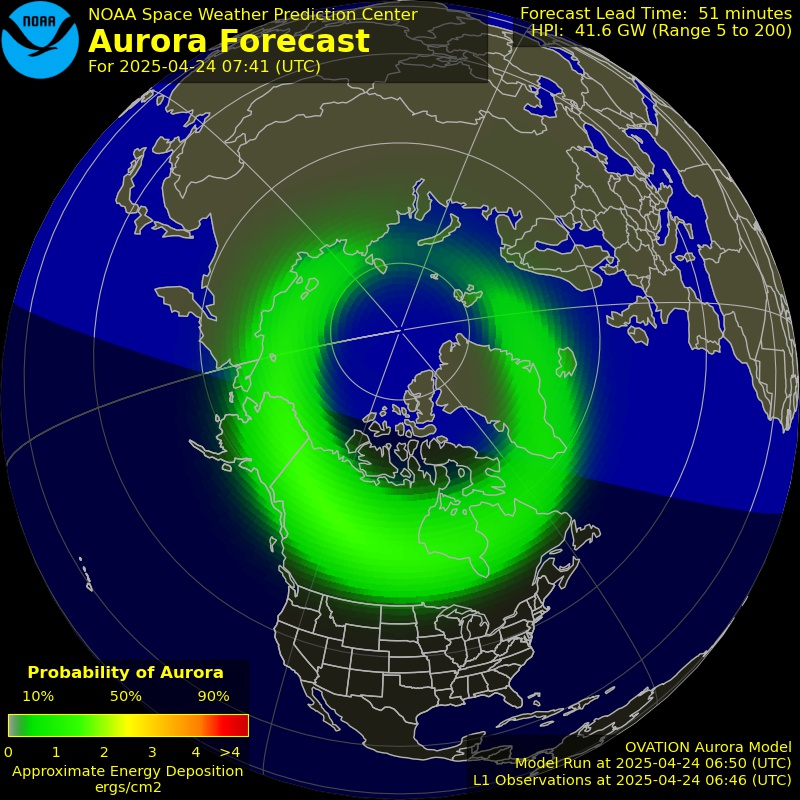
NOAA aurora oval · Northern Hemisphere
This is NOAA's current modeled auroral oval, not a live photograph or a promise of visibility. Zoom your eyes toward North America to see how far south the oval reaches.
NOAA updates its aurora nowcast independently of this page.
Every bar is a NOAA 3-hour Kp sample. The dashed line marks the planning threshold for the region you select above; it is not a visibility probability.
Waiting for NOAA forecast samples…
Below local planning KpAt/above planning KpReference level
Montana regional outlook: what the Kp numbers mean
The live region cards above change with NOAA and weather data. The Kp numbers below are planning triggers, not predictions or promises. Montana's mountain valleys can be dark yet have a blocked northern horizon; an open lakeshore or prairie view may beat a higher overlook.
Glacier and West Glacier — Kp 3 to start watching. West Glacier, Apgar and the North Fork sit far north in protected dark country. At Lake McDonald, the long view north is an advantage; the National Park Service recommends Kp 5 or more for a more realistic photographic outing.
Flathead Valley — Kp 4. Whitefish and Kalispell have useful latitude, but town glow and mountain ridges make a clear north-facing site outside built-up areas important.
Hi-Line — Kp 4. Havre, Malta and the open prairie north of U.S. 2 gain low horizons; wind and fast-moving cloud sheets are the usual trade-offs.
Fort Peck and northeast — Kp 4. Glasgow and Fort Peck Lake offer vast stretches of open country, with much less nearby lighting than city valleys.
Missoula and Bitterroot — Kp 5. Missoula and the Bitterroot Valley sit farther south; choose a legally accessible northward opening rather than the bottom of a narrow valley.
Bozeman and Billings — Kp 5–6. Bozeman is a Kp 5 watch; Billings is closer to Kp 6 in the live regional model. Southern latitude and city light make strong storms more worthwhile than marginal ones.
Where to watch the northern lights in Montana
These are real parks, overlooks or public-use areas, not verified open entrances tonight. A certified Dark Sky Park or Sanctuary means protected darkness, not that every viewpoint is Bortle 1 or 2. No precise Bortle class is asserted here without site measurements. Check conditions, land rules and night access before heading out.
Apgar shoreline, Lake McDonald. Glacier National Park; the lake creates a long northern view. Dark-sky-park setting, but verify night access, road and weather alerts.
North Fork near Polebridge. Glacier's remote northwestern side is identified by NPS for north-facing aurora photography. Road surfaces and services are limited.
St. Mary area, Glacier National Park. An established park astronomy location; dark-sky designation, with terrain and local lights affecting the exact view.
Fort Peck Lake — Hell Creek Recreation Area. Remote south-shore campground/launch with a wide lake horizon. Extremely little urban light, but a long drive on rural roads.
Medicine Rocks State Park, near Ekalaka. Certified International Dark Sky Sanctuary; excellent darkness, but much farther south, so favor strong NOAA activity.
Hyalite Canyon, south of Bozeman. A state tourism-recommended stargazing area away from city lights; mountain walls can block low aurora.
Makoshika State Park, Glendive. Real eastern Montana badlands and recognized night-sky destination; seek an approved overlook or campsite.
Canyon Ferry Reservoir, near Helena. Montana tourism documents shoreline campgrounds for dark-sky views; choose a north-facing open area rather than driving onto a closed access road.
Best months and hours for aurora in Montana
Best planning months: September–October and February–March, with viable dark nights from roughly late August into April. Montana can have aurora year-round, but midsummer twilight makes faint displays harder to see. Start checking after full darkness and pay particular attention to 10 p.m.–2 a.m. Mountain Time; activity can peak earlier or later. Glacier mountain passes, unpaved North Fork roads and high viewpoints may be inaccessible in snow even when the sky is dark.
Aurora photography basics
A tripod matters more than a long lens. Start with a wide lens, focus manually on a bright star, and shoot RAW if possible. Try a 5–10 second exposure, a wide aperture (about f/2.8), and ISO 1600–3200; shorten the shutter to 1–3 seconds if the curtains move quickly. On a phone, use its night or manual mode with the phone braced on a tripod. Check each frame for sharp stars before taking a whole sequence. Bring a red headlamp, spare batteries and warm layers; a camera can record faint color that your eyes see only as a pale glow.
Montana northern lights FAQ
Are northern lights common in Montana?
They are occasional rather than a nightly attraction. Northern Montana can catch weaker events; Billings and Bozeman usually benefit from stronger storms.
What Kp do I need for Glacier National Park?
The live regional watch threshold begins at Kp 3, but NPS photography guidance suggests watching for Kp 5 or higher and a clear sky. The NOAA oval and cloud forecast decide whether a trip makes sense.
Where is the best place near Kalispell?
An open, legal viewpoint toward Lake McDonald or the North Fork may beat city-adjacent viewpoints. Check Glacier access and driving conditions first.
Is Medicine Rocks better than Glacier?
Medicine Rocks has certified outstanding darkness, while Glacier is much farther north. On a marginal event latitude usually matters; in a strong storm Medicine Rocks becomes attractive.
Will a Kp 5 forecast guarantee a display?
No. Kp is a planet-wide measure. A display may stay below your horizon, and clouds, moonlight, twilight or local light can hide it.
Glacier is the benchmark; compare Whitefish/Flathead, the Hi-Line and Fort Peck when clouds vary across the state. Southern cities generally need a stronger geomagnetic push.
Montana northern lights by location
Know where you plan to watch? Open a local page that locks the same live state engine to that location.