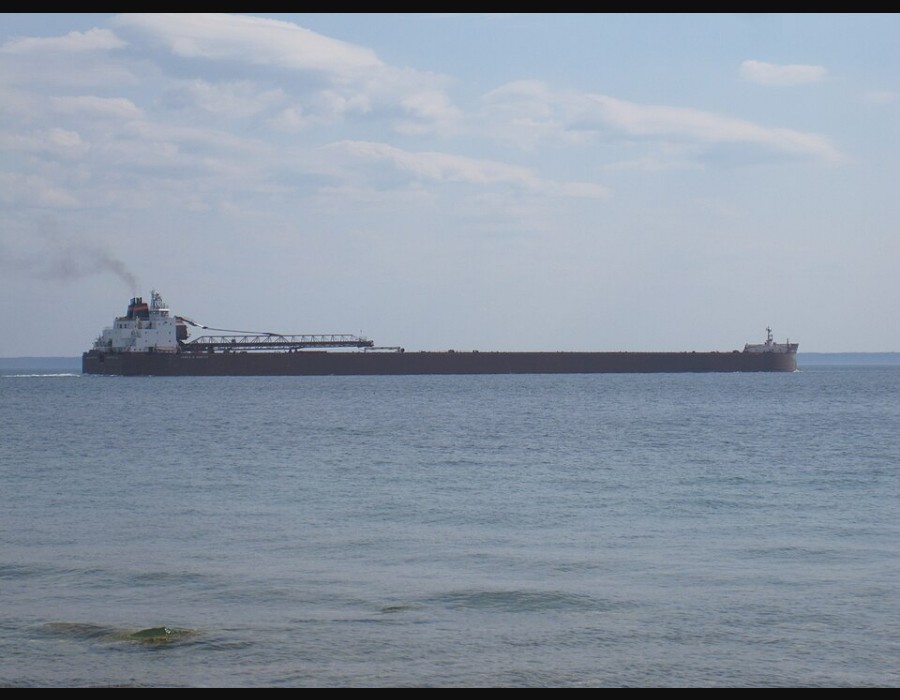
James R. Barker crossing the Straits of Mackinac in May 2014; not a winter layup photograph.

THE GREAT LAKES / A SHIP’S WINTER STORY

James R. Barker

The first thousand-footer built entirely on the Great Lakes.

James R. Barker entered service in 1976 as a landmark of domestic lake shipbuilding. For winter 2025–26, this thousand-footer came into Sturgeon Bay for major inspections and painting in Fincantieri's graving dock.

THE MARITIME FIELD JOURNALLevi Gates · CC BY-SA 4.0 · Historic photo, not this winter’s layup.
Historical evidence — never a live AIS positionSee dated records ↗

01 / The story behind the steel

One ship.
Many chapters.

Names, ownership and home harbors may change. A vessel identity stays connected to its sourced seasonal records below; no historic berth should be mistaken for its location today.

Chapter 1

A turning point in Great Lakes shipbuilding

Interlake Steamship describes Barker as the first 1,000-foot-class freighter built entirely on the Lakes, marking a new era of longer vessels serving the largest locks and ore routes.

Read the original reporting ↗

Chapter 2

A winter with the hull exposed

The Wisconsin Marine Historical Society documented Barker's January 5, 2026 arrival in Sturgeon Bay, with tug assistance before entering Fincantieri Bay Shipbuilding's large graving dock for winter storage and a five-year inspection.

Read the original reporting ↗

02 / Dated historical records

Where this ship spent
its winters.

These are only the winters for which this archive has credible individual evidence. Missing years indicate incomplete reporting, not that the ship was sailing.

WinterHarborDocumented berth or facilityConfidenceSource
Winter 2025–26Sturgeon Bay, WisconsinFincantieri Bay Shipbuilding — graving dock on Jan 5Verified historicalEvidence ↗

Recorded moments

  1. Community port observers reported the Barker leaving its winter berth with tug and Coast Guard assistance.

    Dated record ↗
  2. Arrived at Sturgeon Bay with tug assistance; entered the Fincantieri graving dock for winter storage and five-year inspection.

    Dated record ↗

The 2026–27 layup season is not yet populated here. For contemporary AIS positions use the separate live tracker.

How this history is checked

Every layup record has a dated source. Community reports are distinguishable from port authority and museum records. Harbor coordinates are approximate geographic references; they are not a berth, directions to private shipyards or evidence of live vessel position.

Explore the source policy ↗