Baldwin to M-37 (flies-only)
The flies-only restricted section, by DNR regulation. Paddlers may transit but the river is dominated by wade-fishing during open seasons. Most paddlers skip this section out of courtesy and start at M-37.
Practical guide to paddling the Pere Marquette, Michigan's first federally designated Wild and Scenic river and the most heavily fished trout stream in the state.
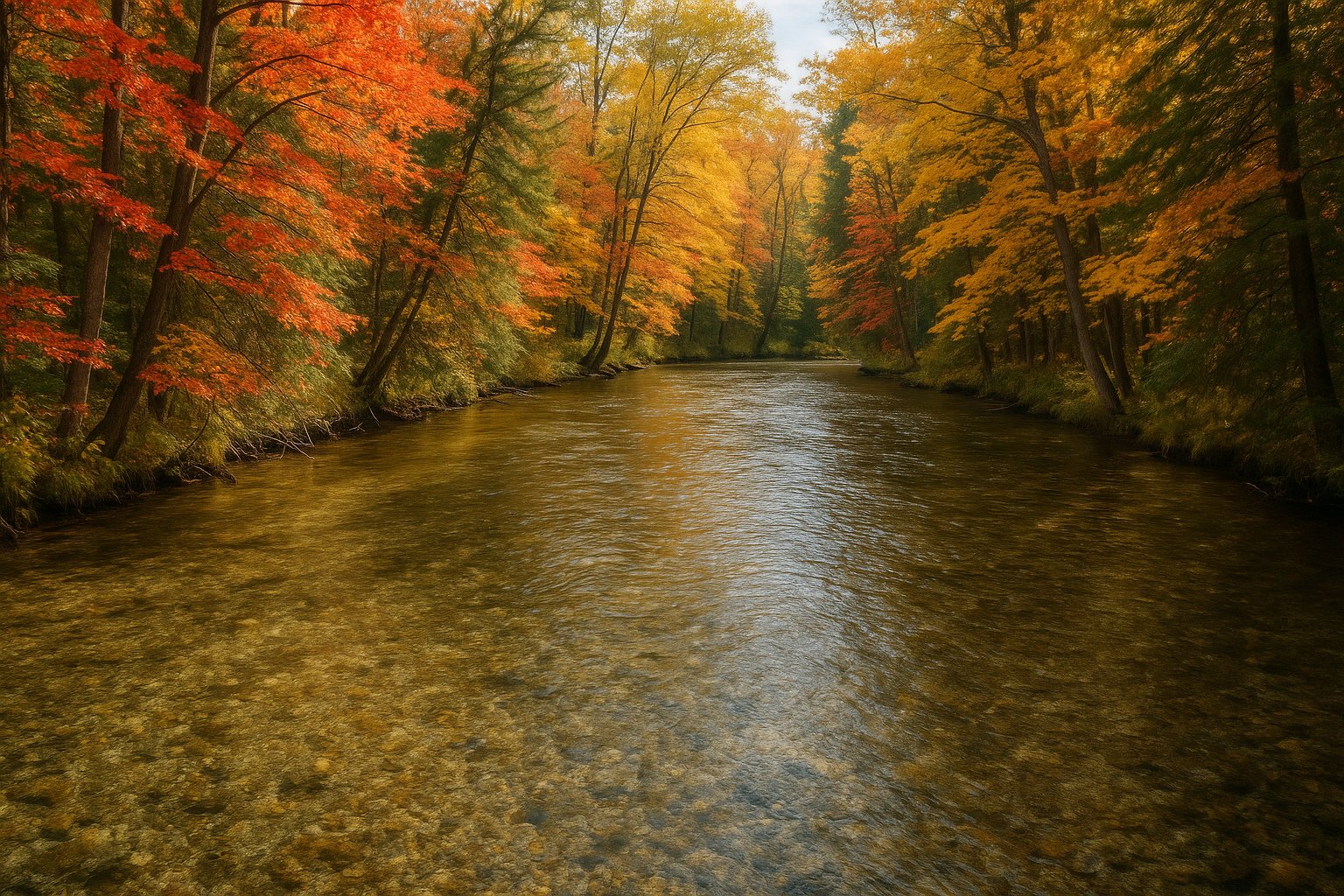
The Pere Marquette is the most heavily fished trout stream in Michigan and one of the most heavily fished in the United States. It was the first Michigan river designated a National Wild and Scenic River, in 1978, and the upper section is flies-only by Michigan DNR regulation. For paddlers, the river is excellent. For anyone who paddles without considering the fishing pressure, the river will not be a good experience.
The Pere Marquette runs roughly 64 miles from Baldwin to Pere Marquette Lake at Ludington. The paddling stretches are concentrated in the middle reaches between M-37 and Walhalla. The water is gin clear over a gravel bottom, the cedar-lined banks are nearly continuous, and the current is steady but not pushy at typical flows.
This page is organized in the same section-by-section format as the Manistee spoke. The critical caveat for the Pere Marquette is that the fishing schedule shapes everything: salmon run from late August into October, steelhead from October through April, trout from late April through July. Paddlers who time their trips outside the peak fishing weeks have a different river than those who don't.
The flies-only restricted section, by DNR regulation. Paddlers may transit but the river is dominated by wade-fishing during open seasons. Most paddlers skip this section out of courtesy and start at M-37.
The most popular livery stretch. Roughly 9 miles, half-day paddle. Clean current, accessible from the M-37 bridge, takes out at Gleason's Landing access. Heavy livery traffic in summer; salmon and steelhead pressure in fall and spring.
The middle stretch, roughly 12 miles. Slower current than the upper section, more cedar shade, deeper holes. Strong brown trout water. Camping along the national forest sections is allowed with the usual restrictions.
The transitional stretch toward the takeout at Custer Bridge. The river widens, current slows further, fishing pressure drops. Less popular with liveries but useful for a longer self-supported trip.
The lower river is dam-free all the way to Pere Marquette Lake at Ludington, which makes it one of the few Michigan rivers paddleable from upper trout water to the Great Lake without portaging. The lower miles are slow, more sand bottom than gravel, and finish in a wide riverine lake. Strong post-spawn salmon and steelhead in the river itself.
Baldwin Canoe Rental is the largest operator on the Pere Marquette. Pere Marquette River Lodge is the orchestrating outfitter on the upper section and also runs guided fishing trips, which means their information on water-level and fishing-pressure context is generally the best available. Both rent paddling boats and provide shuttle service.
USGS gauge 04122500 (Pere Marquette River at Scottville) is the standard reference. Median May-September flow runs 350-550 cfs. The river is spring-fed across much of its length, which means flows are more stable than rain-driven rivers; the gauge readings rarely move dramatically except in major storms. Cold water year-round (50s-low 60s even in August) makes hypothermia a real risk for swimmers and capsized paddlers.
Yes, on the M-37 to Gleason's Landing section in summer at median flow. The current is steady but not aggressive, the channel is wide enough that strainer-pinning is uncommon, and liveries provide all gear. Avoid the river during salmon and steelhead seasons (mid-August through April) unless you want to share the water with wade fishermen and drift boats.
By Michigan DNR regulation, the section of the Pere Marquette between M-37 and the Gleason's Landing access is restricted to fly-fishing only, catch-and-release for trout. The regulation has been in place since 1969 and is one of the longest-running flies-only stretches in the Midwest. Paddlers may transit the section but should expect heavy wade-fishing pressure and yield the right of way.
On Huron-Manistee National Forest land, yes, with the standard restrictions (100 feet from water, no camping at established access points, pack out everything). Several rustic campgrounds along the river offer formal sites. Private land along the lower stretches restricts camping options; some liveries arrange permitted-site overnights as part of their multi-day packages.
Standard livery day trips run 9-12 miles, 4-6 hours at paddling pace. The M-37 to Gleason's Landing section is the most popular full-day option. Half-day trips of 5-6 miles are available with custom shuttle from most liveries.
The Pere Marquette is one of the original Michigan rivers in the Pacific salmon program. Coho were first stocked in the river in 1966, with kings following shortly after. The river now supports both natural reproduction and stocking of all three salmon species (coho, chinook, and Atlantic) plus steelhead. The salmon run in September and October draws fishermen from across the country, which is the dominant social variable on the river for those eight weeks.